Khatamband & Paiper Mache · Srinagar, Kashmir
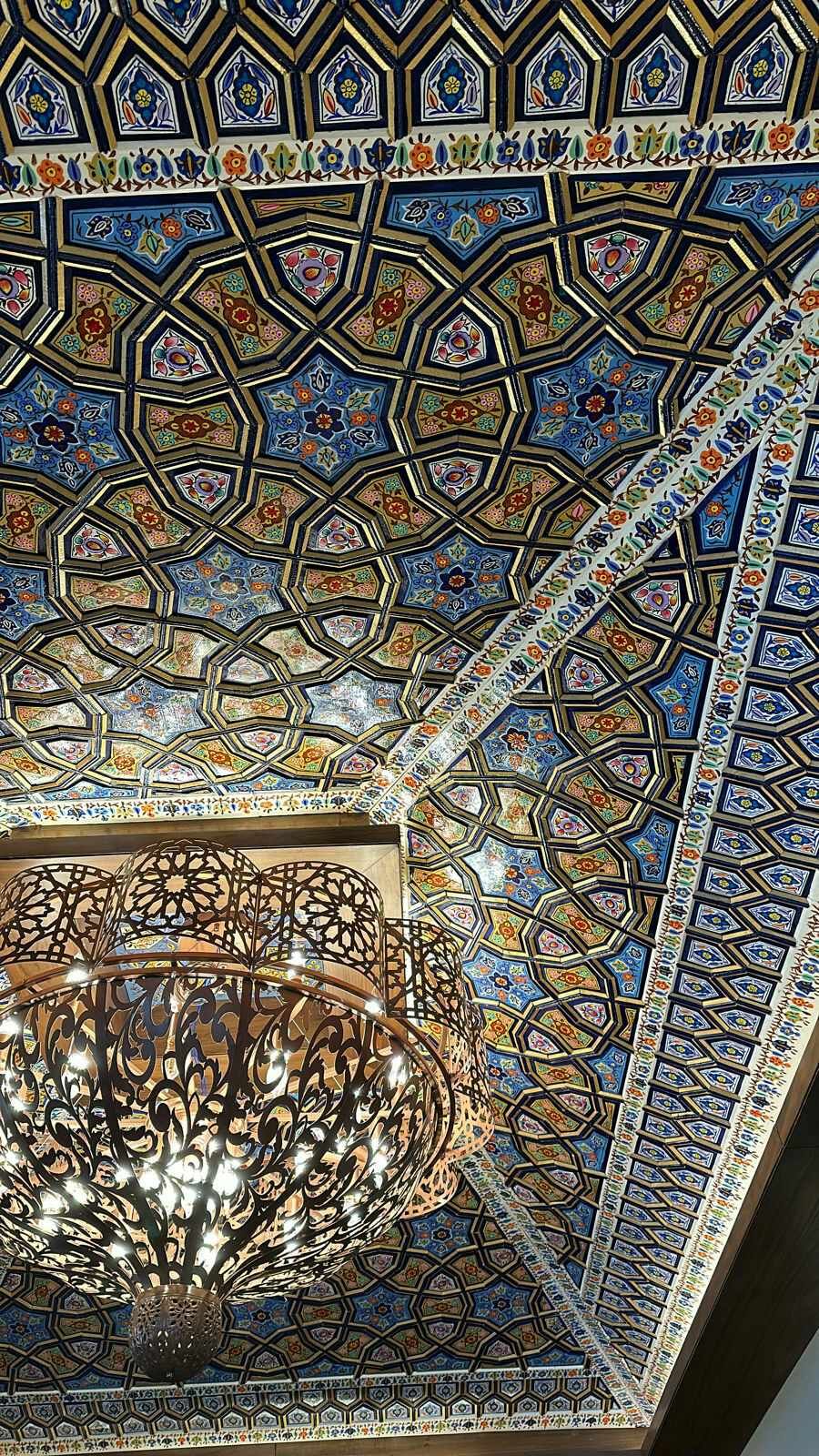
Khatamband ceilings in Srinagar, painted by hand.
The ceiling is the best wall in the room. Khatamband interlocks the wood with no nail and no glue, then paper machie naqashi paints it — flower on flower, gold leaf, lacquer.
The Craft
Two trades, one ceiling.
A khatamband ceiling is built twice. First it is cut — hundreds of small wooden pieces shaped so that they hold each other, with nothing driven through them. Then it is painted, in the same paper machie naqashi that has been done in Srinagar since the fourteenth century, worked overhead instead of on a box. Most workshops do one or the other. We do both, so the pattern in the wood and the pattern in the paint are drawn together from the start.
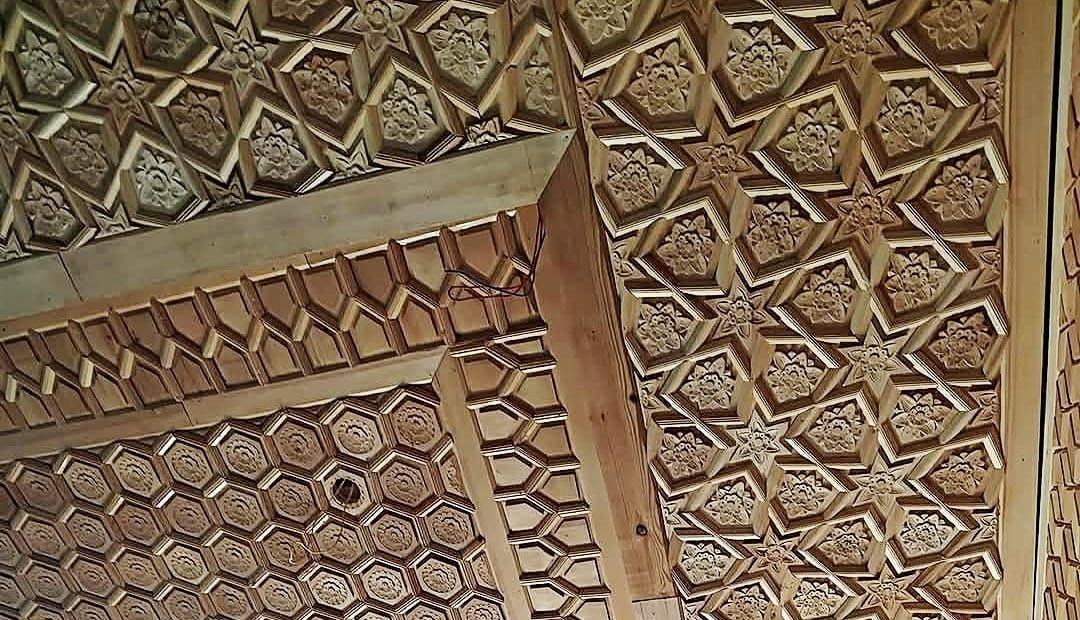
Khatamband
the interlocking ceiling
Silver fir — budloo — seasoned until it has stopped moving, with deodar, pine or walnut where the room asks for it. Every piece is cut by hand to a grooved profile and slid into its neighbour. Nothing is nailed. Nothing is glued. The ceiling is held up by its own geometry, which is why it flexes in a tremor instead of cracking, why it can be taken down and put back up in another room, and why the wood stays free to move with the season. Set into its frame it hangs an inch or two below the slab, and the air caught in that gap is what keeps the room warm through Chillai Kalan and cool in July.
- Seasoning
- Marking
- Hand-cut profiles
- Dry assembly
- Framing
- Fitting
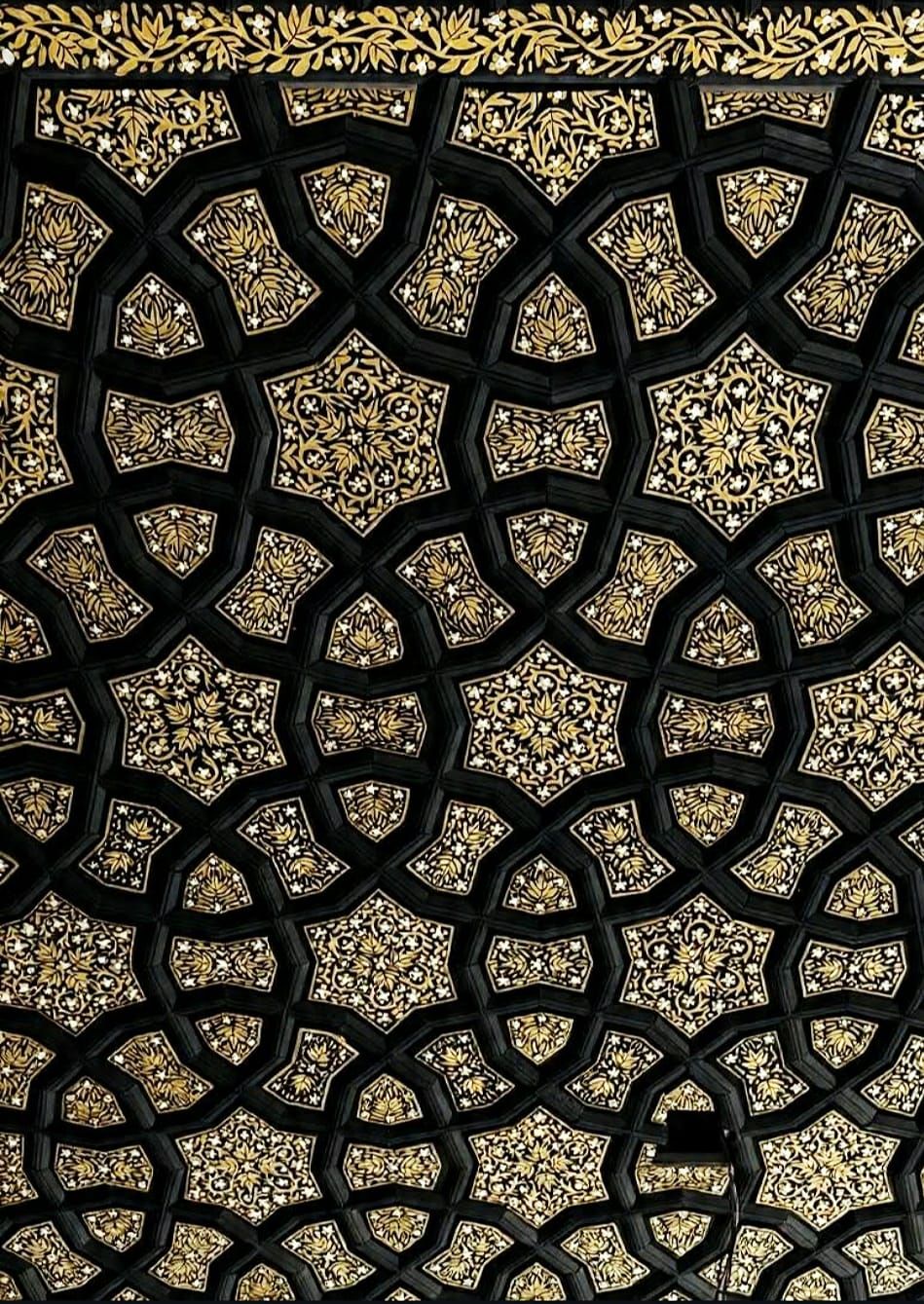
Naqashi
the paper machie painting
Paper machie is not a sticker and it is not a printed sheet. Each panel takes its gypsum ground and is burnished smooth, then the naqash lays in the motif with a squirrel-hair brush cut to about eleven bristles — the ground, then the flower, then the flower again on top of itself, because a flower painted once looks painted and a flower painted four times looks grown. Gold goes on last as varq, real leaf, pressed down by hand. After that it is lacquer, and lacquer, and lacquer, with a day of drying between each, until the light stops sinking into the ceiling and starts coming back off it.
- Gypsum ground
- Burnish
- Motif layers
- Varq (gold leaf)
- Lacquer
- Cure
The Motifs
What we paint into the panels.
The wooden geometry gives a ceiling its bones — panj phool, shash posh, dawazdah girdah, chahar kunj, the old khatamband patterns. What goes inside each panel is the naqashi vocabulary below. A naqash does not invent it; he inherits it and spends a life getting fluent in it. Ask for any of these by name.
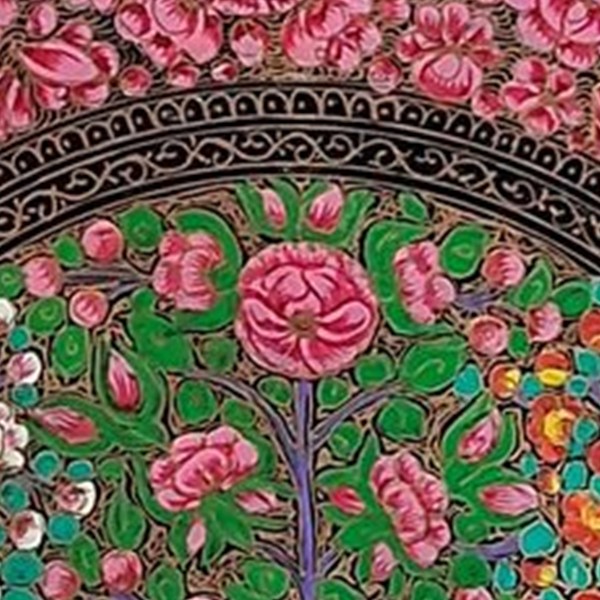
Gul-e-Vilayat
the foreign rose
The rose that came up the trade road from Persia and never left. Open, eight-petalled, painted large — it keeps its shape when it is four metres above your head, which is why it carries the centre panels of a big ceiling.
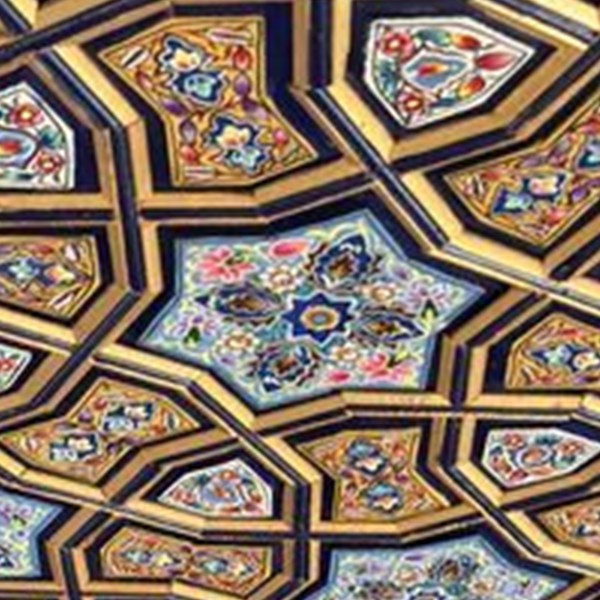
Gul Andar Gul
flower within flower
A bloom nested inside a bloom inside a bloom. Overhead it becomes a test of registration across the whole grid: the rings must sit true panel to panel, or the room reads crooked from the doorway.
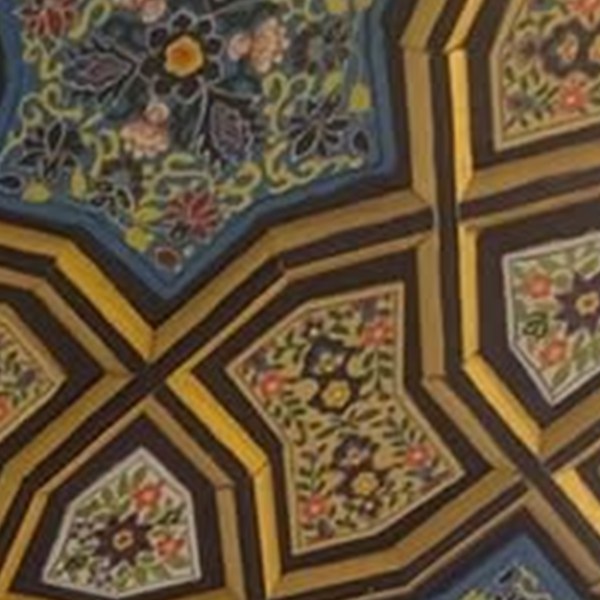
Hazara
the thousand
A field of a thousand small flowers with no ground left showing. The hardest thing we paint and the thing people come to us for. A hazara ceiling is months of work and there is nowhere in it to rest your hand.
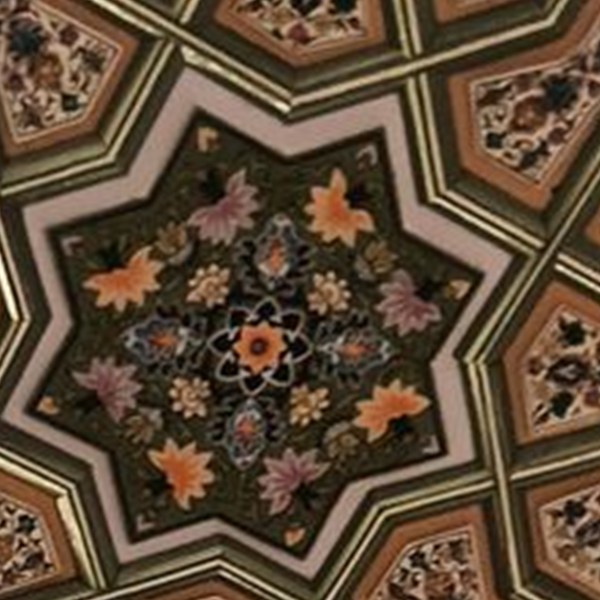
Bouni
the chinar leaf
The signature of the valley. Five lobes in autumn colour — sindoor red into gold — usually run around the border band rather than inside the panels, so that it frames the whole room.
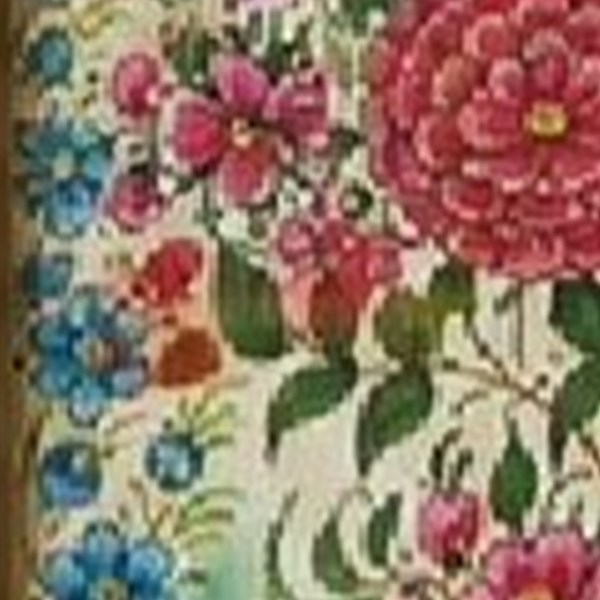
Bulbul & Kingfisher
birds among branches
Birds worked into the vine, usually in pairs, usually half-hidden. On a good ceiling you find the second bird a month after you have moved in.
Badamdar
the almond
The almond form — the ancestor of what the world now calls paisley. Persian in descent, and the motif that fits best into the long narrow panels of a beam or a wall dado.
Our Work
Ceilings, walls and tops we have finished.
Each of these was made for one particular room and exists only there. Tell us your space and we will draw the pattern to it — the same hands, a pattern of your own. Send a photograph of your ceiling on WhatsApp and we will come back with what it would take.
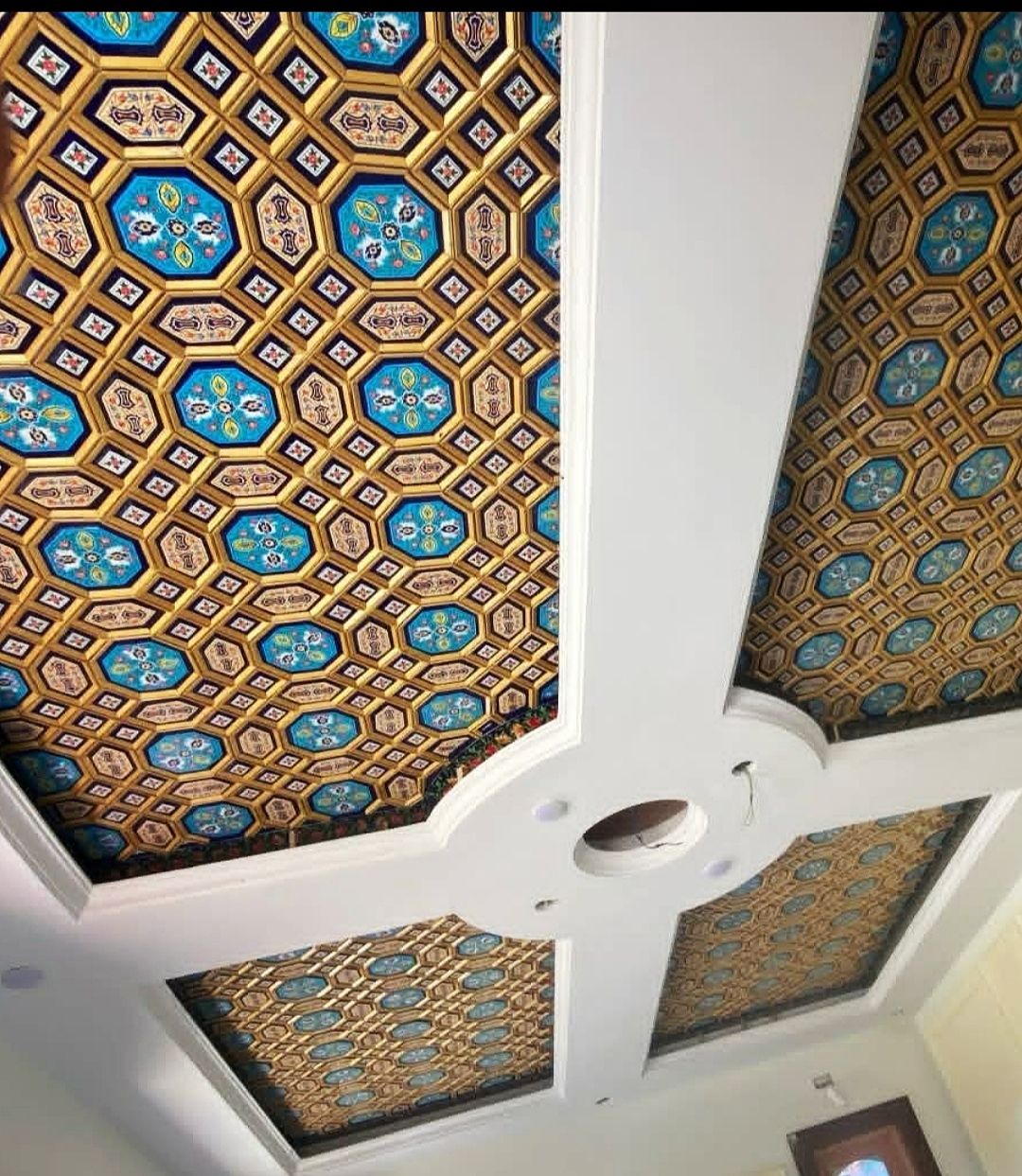
Turquoise & Gold Octagon Ceiling
Dawazdah Girdah
Residence · SrinagarDeodar · gold leaf · lacquerAskAsk about this work about the Turquoise & Gold Octagon Ceiling on WhatsApp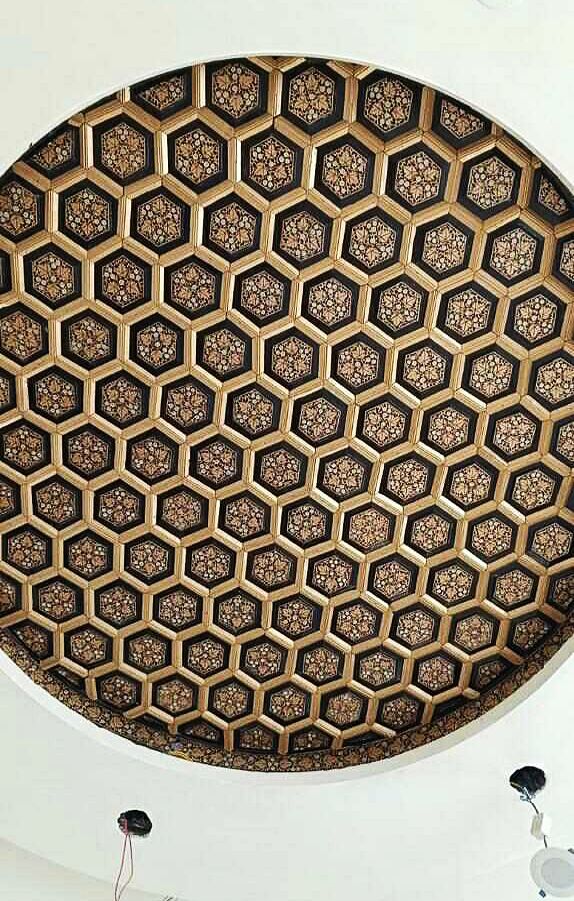
Gold Honeycomb Dome
Shash Posh
Residence · SrinagarSilver fir · gold on black lacquerAskAsk about this work about the Gold Honeycomb Dome on WhatsApp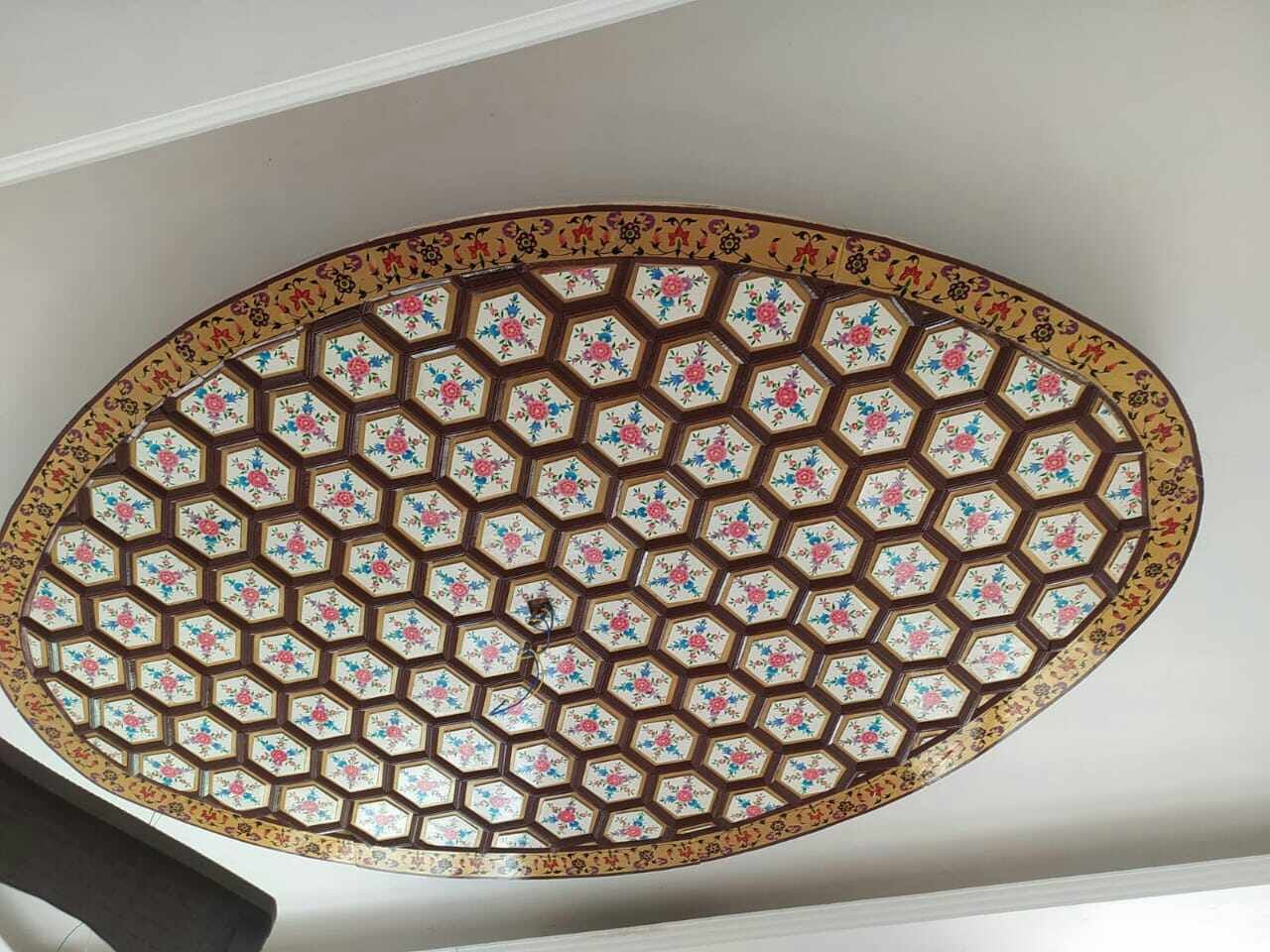
Oval Rose Honeycomb
Shash Posh
Residence · SrinagarSilver fir · ivory ground · painted borderAskAsk about this work about the Oval Rose Honeycomb on WhatsApp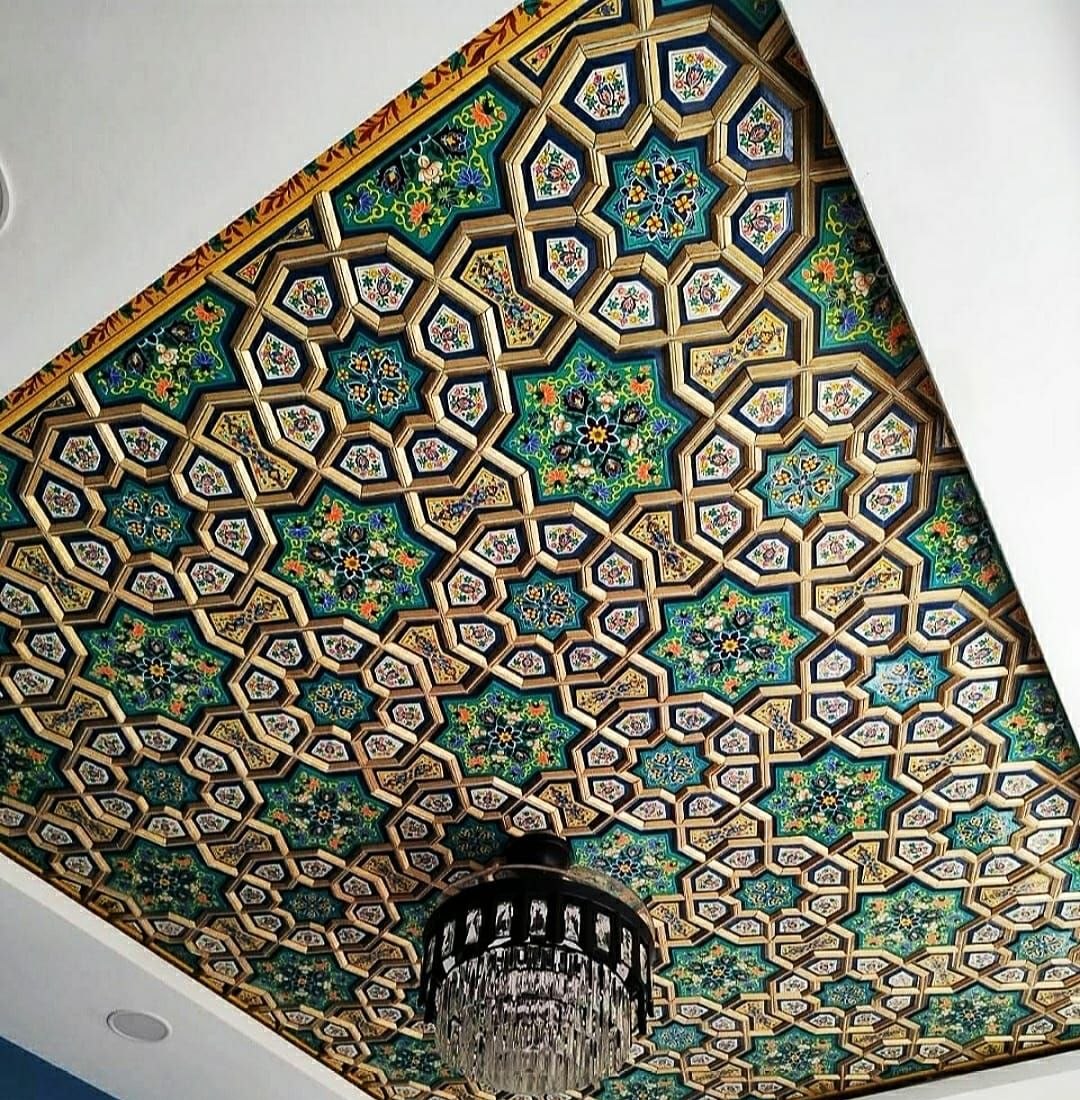
Emerald Star Ceiling
Panj Phool
Residence · SrinagarDeodar · gold ribs · emerald groundAskAsk about this work about the Emerald Star Ceiling on WhatsApp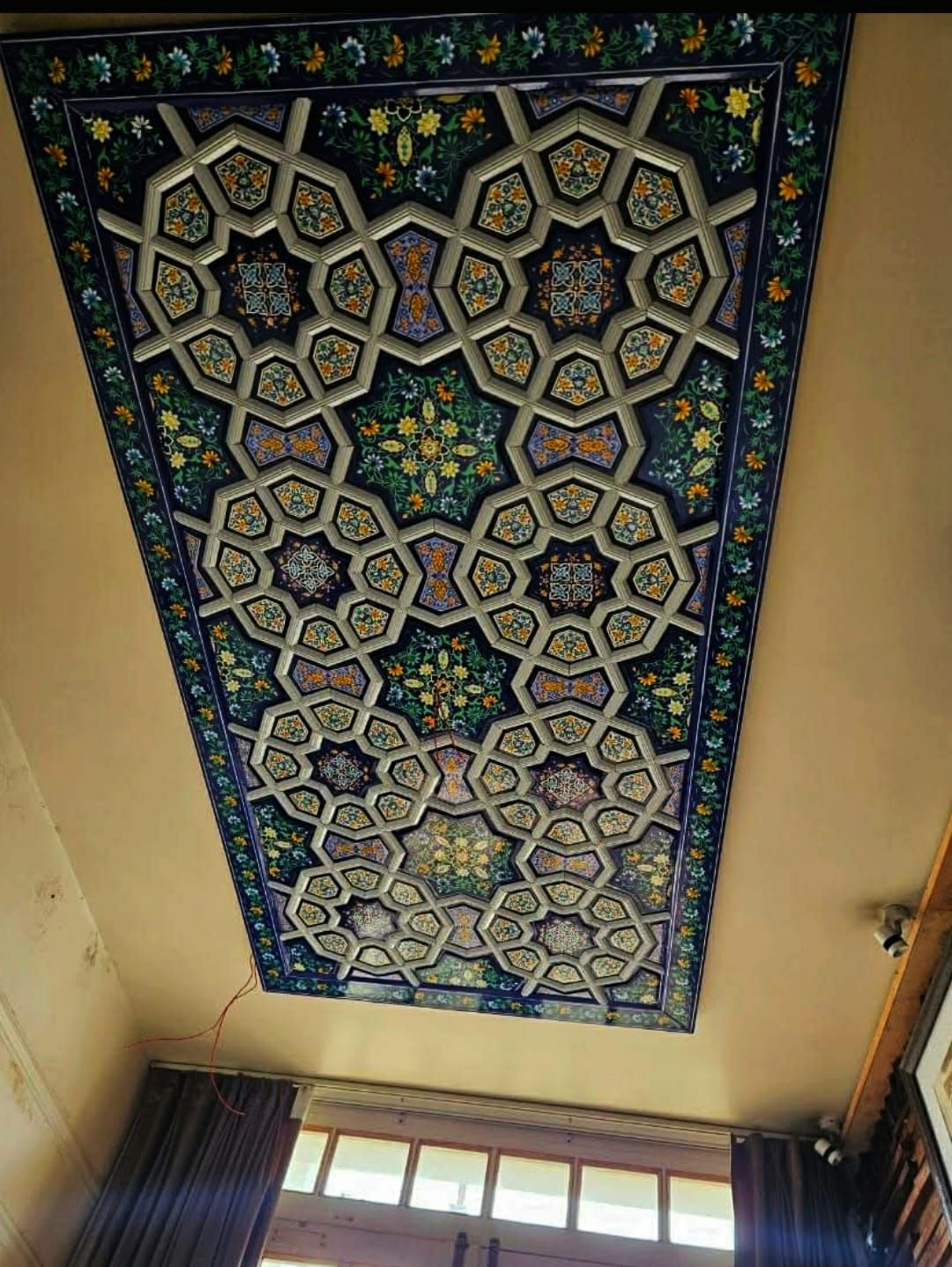
Navy-Bordered Hall Ceiling
Dawazdah Girdah
Hall · KashmirSilver fir · navy ground · painted borderAskAsk about this work about the Navy-Bordered Hall Ceiling on WhatsApp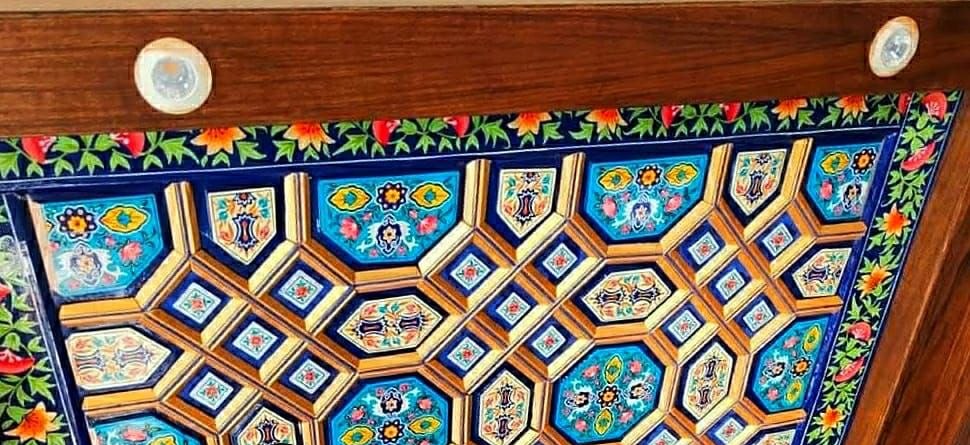
Turquoise Octagon Ceiling
Chahar Kunj
Residence · SrinagarWalnut frame · turquoise groundAskAsk about this work about the Turquoise Octagon Ceiling on WhatsApp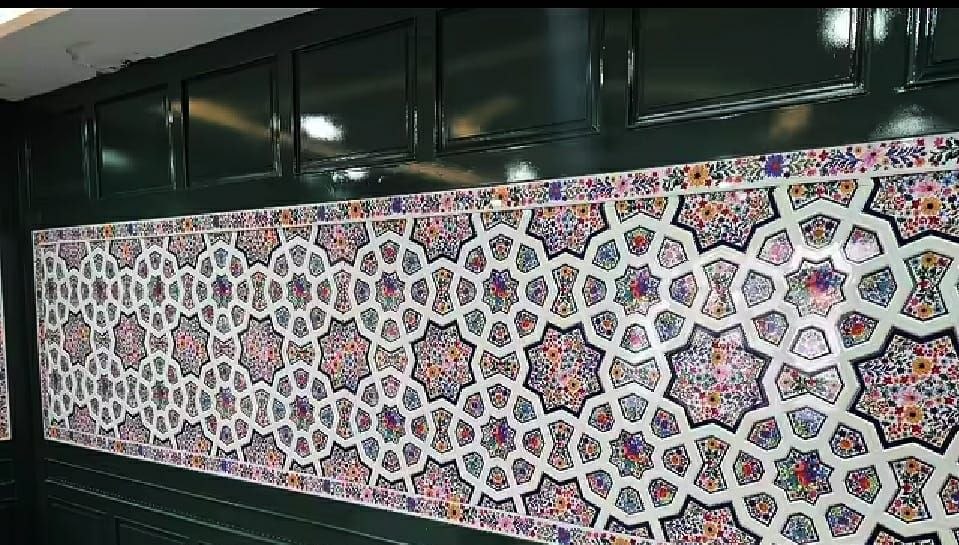
Dining Room Wall Band
Yak Dar Yak
Dining room · KashmirWall panelling · ivory interlaceAskAsk about this work about the Dining Room Wall Band on WhatsApp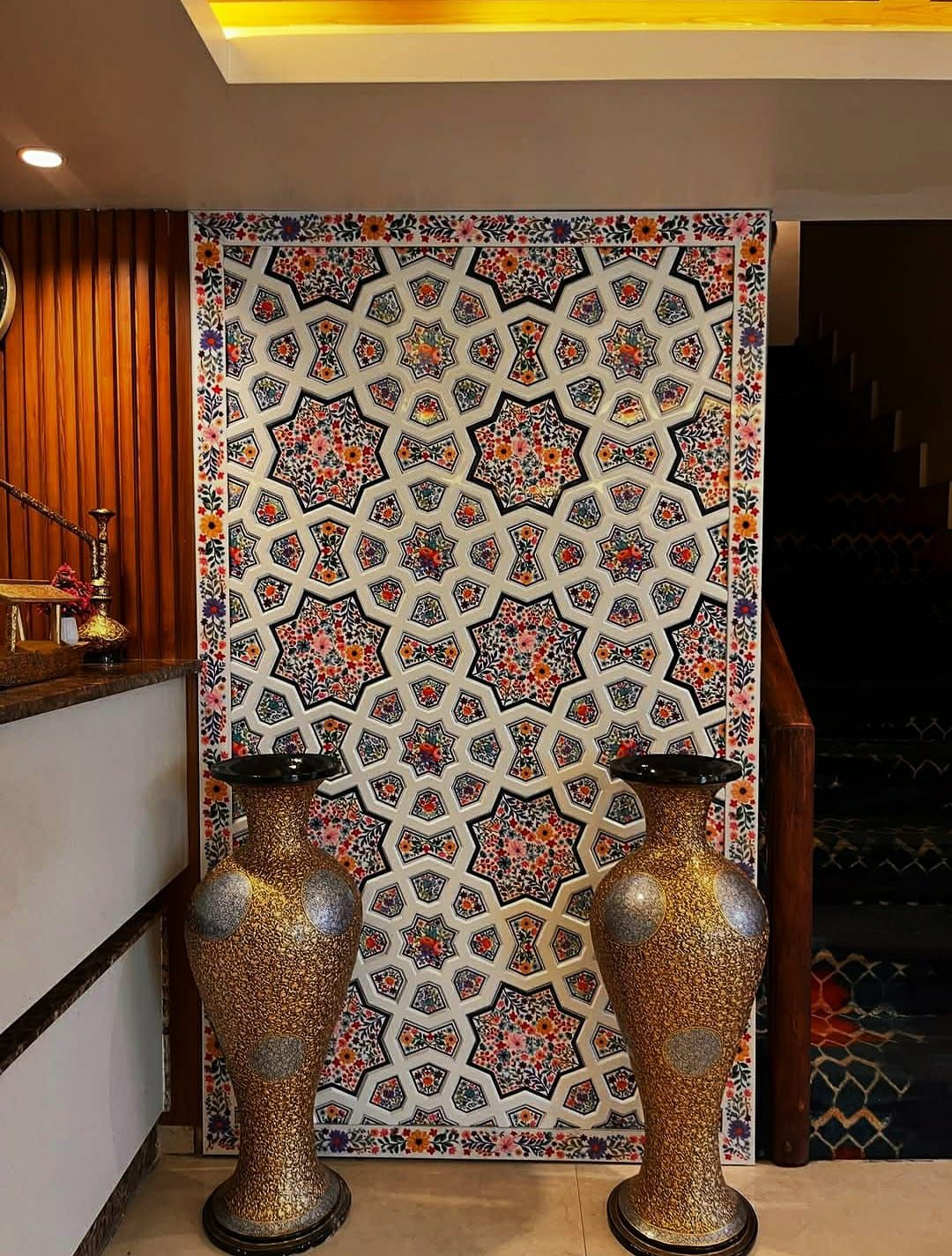
Reception Wall Panel
Panj Phool
Hotel lobby · SrinagarWall panelling · painted borderAskAsk about this work about the Reception Wall Panel on WhatsApp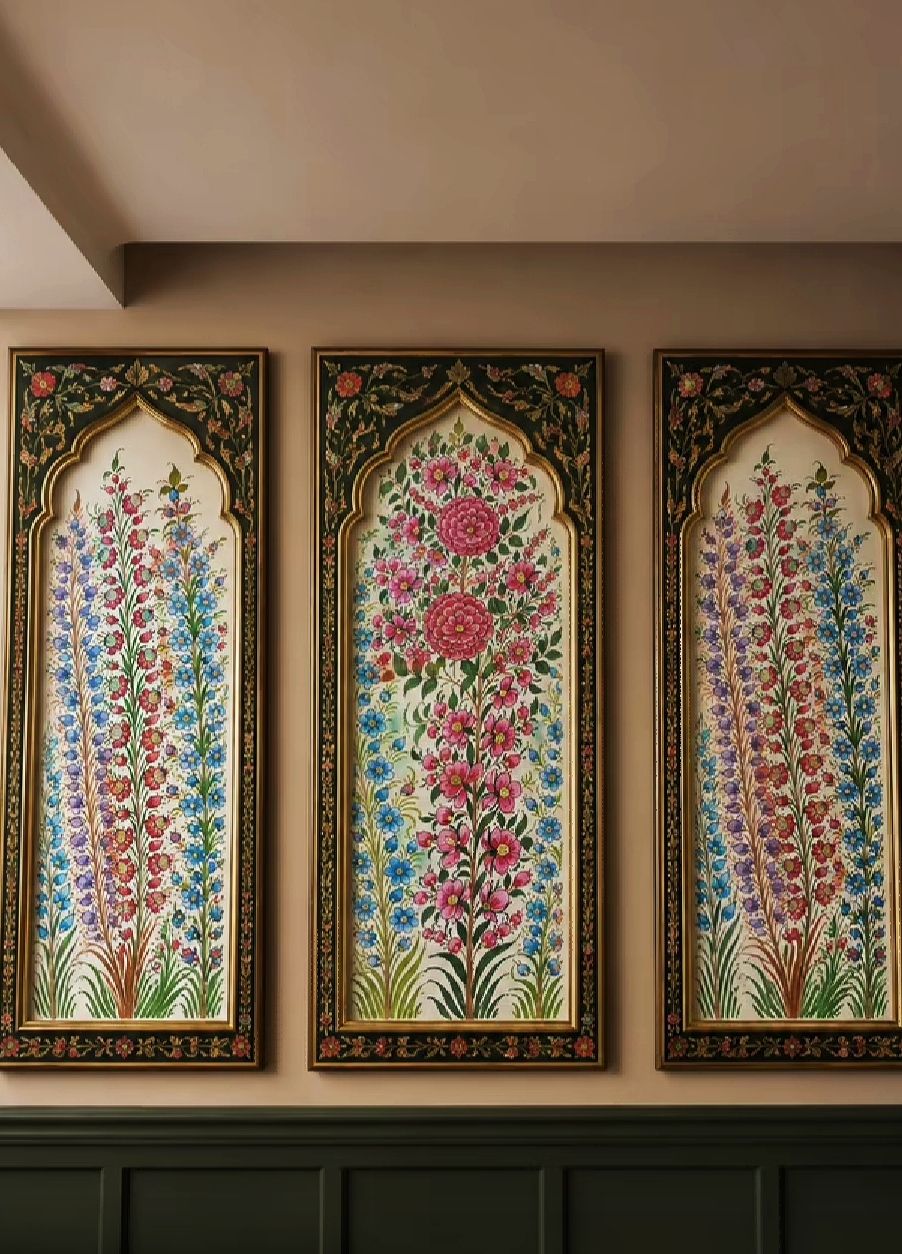
Arched Garden Panels
Naqashi Panel
Drawing room · KashmirFramed panels · ivory groundAskAsk about this work about the Arched Garden Panels on WhatsApp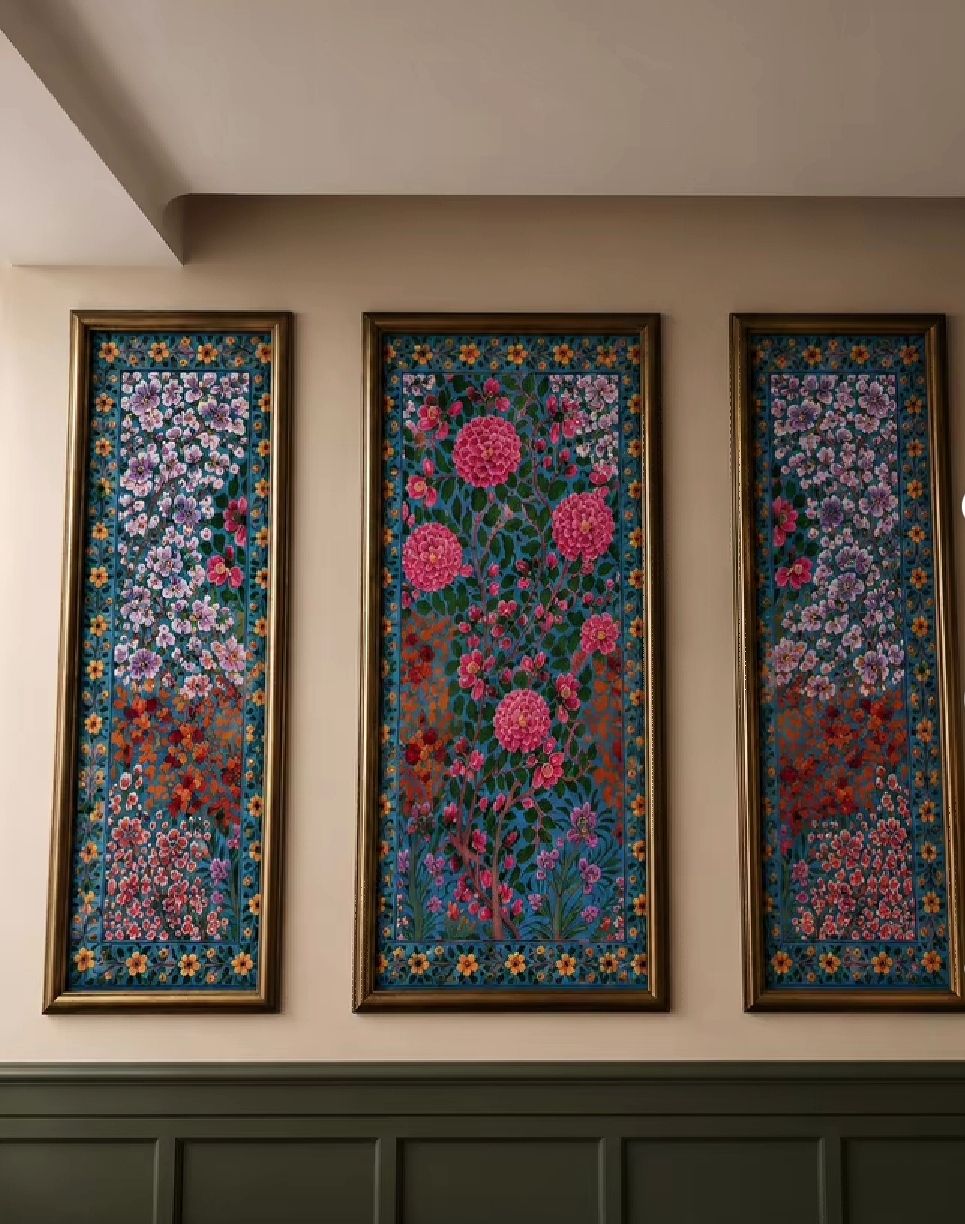
Teal Dahlia Panels
Naqashi Panel
Drawing room · KashmirFramed panels · teal groundAskAsk about this work about the Teal Dahlia Panels on WhatsApp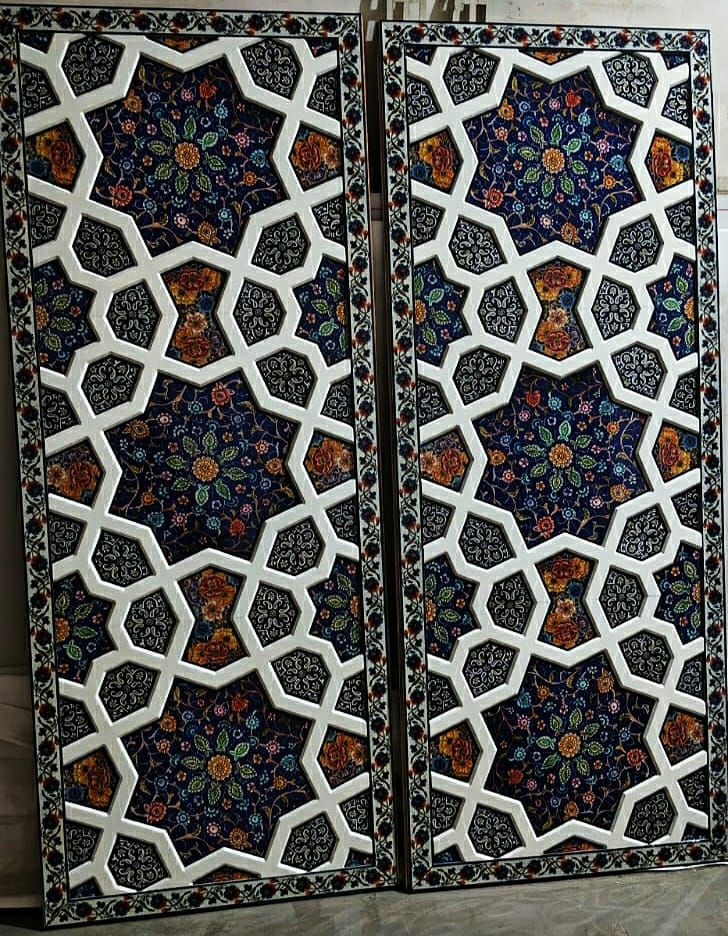
Lapis Panel Pair
Panj Phool
Wall panels · SrinagarLapis ground · gold detailAskAsk about this work about the Lapis Panel Pair on WhatsApp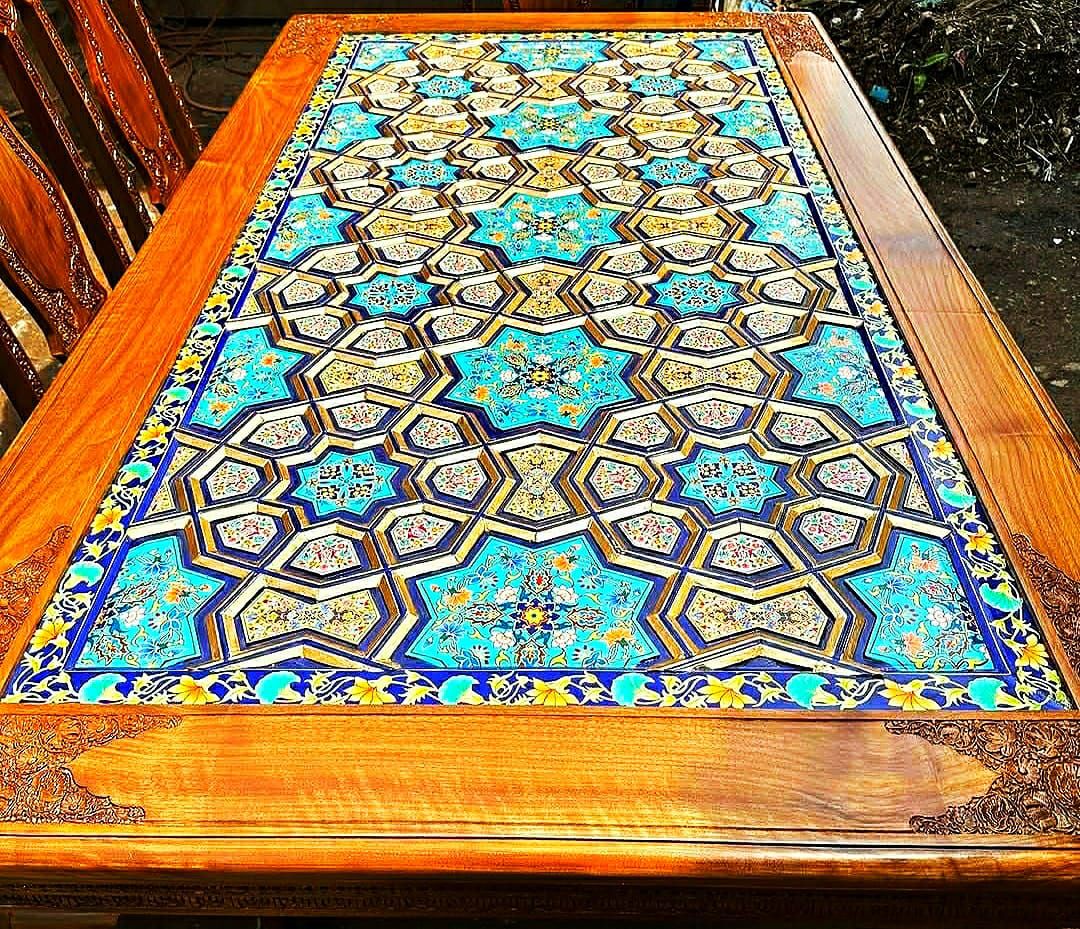
Naqashi Dining Table Top
Dawazdah Girdah
Dining table · SrinagarCarved walnut · seven coats lacquerAskAsk about this work about the Naqashi Dining Table Top on WhatsApp
Why Khatamband
A ceiling with no nail in it.
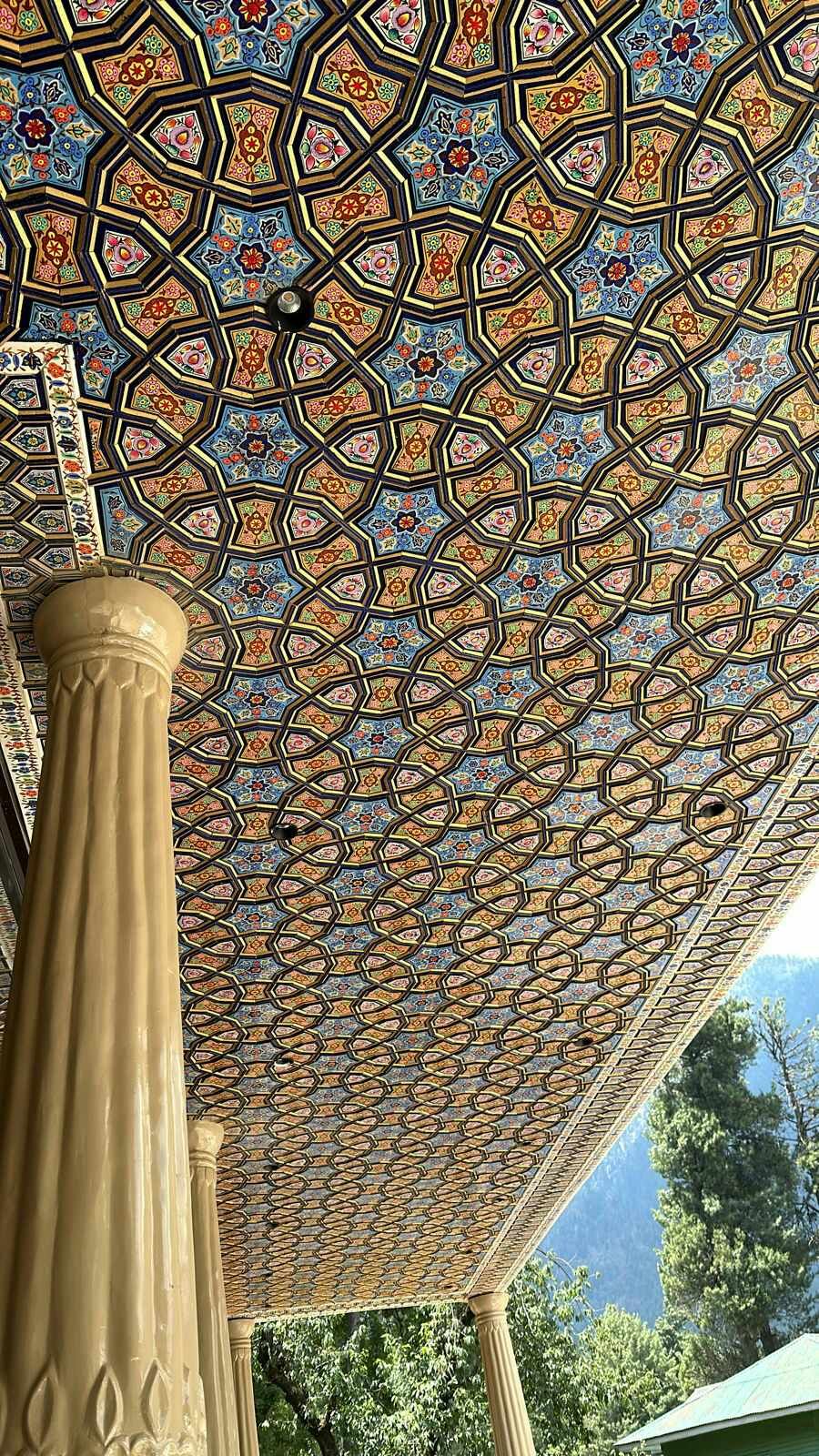
Khatamband came into Kashmir from Persia and Central Asia and was being fitted here from about 1541 onward — first in the shrines and the palaces, then the houseboats, then the good houses. Six hundred years later the method has not changed, because nobody has found a better one. Small pieces of light wood, cut to hold each other, laid up into a pattern that carries its own weight.
It is not decoration stuck onto a ceiling. It is the ceiling. That distinction is the whole reason it outlives plaster: there is no nail to rust out, no glue line to fail, and the wood is left free to move with the season instead of being pinned until it splits.
Both halves of what we do are GI-tagged crafts of Jammu & Kashmir — khatamband and Kashmir paper machie. There is no shortcut in either, and anyone quoting you a printed vinyl ceiling in a week is not selling you this.
- No nails, no glue
- Hand-cut grooves, slid together. The pattern holds itself, so there is nothing in it to corrode and nothing to let go.
- Warmer, and quieter
- The wood and the air trapped behind it insulate the room — warmer through winter, cooler in summer, and far softer to sit under.
- Moves in a tremor
- Interlocked pieces flex against one another and settle back. A plaster ceiling cracks. This one does not.
- You can take it with you
- It comes down panel by panel and goes back up in another room. Old houseboat ceilings have been moved more than once.
Both crafts carry a Geographical Indication of Jammu & Kashmir. Cut, fitted and painted by hand in Srinagar — by us, in your room.
Commission
How a ceiling gets made.
Every job starts with the room, never with a catalogue. From the first measurement to the last coat of lacquer a normal room runs six to ten weeks — longer for a hazara ground, longer for a hall.
- I
Send us the room
A photograph of the ceiling, its length and width, and the height it sits at. If you already have a pattern or a colour in mind, send that too. We quote from this — no charge, and no visit needed yet.
- II
Choose pattern and palette
We come and measure, and bring painted samples — the khatamband pattern in wood with the naqashi motif on top of it, in your colours. Nothing is cut until you have held the sample in your hand.
- III
We cut, fit and paint on site
The wood is cut and dry-assembled at the workshop, then fitted in your room and painted in place. You get photographs at the gold-leaf stage. We clear up after ourselves.
Questions
What people ask before they commission one.
If your question is not here, send it on WhatsApp — you will get an answer from someone who fits these ceilings, not from an office.
What is khatamband?
Khatamband is the traditional Kashmiri wooden ceiling: hundreds of small pieces of light wood, each cut by hand to a grooved profile and slid into its neighbours so the pattern holds itself together. There is no nail in it and no glue. It came to Kashmir from Persia and Central Asia and has been fitted here since about 1541, first in the shrines and palaces, then the houseboats and the good houses. It is a GI-tagged craft of Jammu & Kashmir.
What does a khatamband ceiling cost in Srinagar?
There is no fixed price list. It is quoted by the square foot after a measurement, and the number moves with three things: the pattern you choose, whether the ceiling is painted in paper machie naqashi afterwards, and the wood. A plain khatamband in silver fir costs a fraction of a hazara-painted ceiling in walnut. Send a photograph of the room with its length, width and height on WhatsApp and you will get a real figure back — we do not publish a rate card, because a rate card for a fitted ceiling is a guess.
How long does it take?
A normal room runs six to ten weeks from first measurement to last coat of lacquer. The wood is cut and dry-assembled at the workshop in Eidgah, then fitted in your room and painted in place. A hazara ground or a large hall takes longer. You get photographs at the gold-leaf stage so nothing is a surprise.
How is khatamband different from a false ceiling or POP?
A false ceiling or a POP ceiling is a surface hung under your slab and then painted. Khatamband is a structure: the wood carries itself, so there is no nail to rust out and no glue line to fail. It insulates — the wood and the air trapped behind it keep a room warmer in winter and cooler in summer. It flexes in a tremor instead of cracking. And it can be taken down panel by panel and rebuilt in another house, which no plaster ceiling can do. It costs more and it lasts generations.
Do you fit false ceilings and PVC ceiling panelling as well?
Yes. Khatamband and paper machie naqashi are the trade, but the same team fits wooden wall panelling, HDMR panelling, PVC ceiling panelling, false ceilings and wooden carving, and will take on the interior of a whole room as interior designers and decorators. If you want khatamband over the drawing room and a plain false ceiling through the bedrooms, that is one job and one quote — and plenty of people who arrive looking for interior decorators in Kashmir leave with a wooden ceiling they had not heard of that morning.
Are you khatamband dealers, or do you make it yourselves?
We make it. Most khatamband dealers in Srinagar take an order and send it out to whoever is free that month — you meet a salesman, not the carpenter. Here the same workshop seasons the wood, cuts every piece, fits it in your room and then paints the naqashi on top of it. That is the whole reason the geometry in the wood and the pattern in the paint line up: they are drawn together, by people who will both be standing in your house. The same goes for the rest of it — a good many false ceiling dealers and wooden carving dealers in Srinagar are reselling labour that is not their own, and you find that out when something needs putting right. Here there is nobody else to point at.
I searched for khatamband near me — do you cover my area?
Almost certainly, if you are anywhere in the valley. We fit khatamband ceilings across Srinagar and out through Ganderbal, Budgam, Baramulla, Anantnag, Pulwama and Kupwara, and we travel further for a whole house or a hotel, including Jammu and outside the state. The quickest way to find out is to send the room on WhatsApp — you get an answer fast, usually the same day, and it costs nothing to ask.
Who does the best khatamband ceiling in Srinagar?
Everybody in this trade will tell you they are the best, so here is how to judge it for yourself instead. Ask to see a ceiling before it was painted — bare khatamband is where the work shows, because a loose joint cannot hide under naqashi. Look at whether the pattern closes cleanly into the border or dies awkwardly at the wall. Ask who paints it, and whether that is the same firm that cut the wood, because when the carpenter and the naqash are different companies the geometry and the painting never quite agree. And ask to stand in a finished room rather than look at a photograph. We are happy to be judged on all four.
Which areas do you cover?
All of Srinagar and the districts around it — Ganderbal, Budgam, Baramulla, Anantnag, Pulwama and Kupwara — and we travel across J&K for larger jobs, including Jammu and outside the state. The workshop is on Dr Ali Jan Road at Syed Pora, Eidgah, and visitors are welcome if you would rather see the wood before you decide.
Can khatamband be fitted in a house that is already built?
Almost always. The ceiling is framed and hung an inch or two below your existing slab, so nothing structural is touched and no wall has to come down. It is fitted room by room, and we clear up after ourselves. It works in houses, hotels, mosques, offices, shops and houseboats.
What is paiper mache naqashi, and will it fade?
Naqashi is the hand painting: the panel is given a gypsum ground, burnished smooth, then the motif is laid on in layers with a squirrel-hair brush, finished with real gold leaf — varq — and sealed under several coats of lacquer. It is painted, not printed and not a sticker. Kept out of direct weather and under its lacquer it holds its colour for decades; ceilings painted a century ago in Srinagar are still bright.
Contact
Come to the workshop, or send us the room.
WhatsApp is the fastest way to reach us — it is the number the workshop actually answers, and a photograph of your ceiling gets you a real answer the same day. Visitors are welcome at Syed Pora; tell us you are coming so that someone is at the bench and not out on a site.
- Workshop
- Dr Ali Jan RoadSyed Pora, EidgahSrinagar, Jammu & Kashmir 190011IndiaGet directions
- +91 88999 97162
- @woodeninterior247
- Hours
- Saturday to Thursday, 10am – 7pm. Friday, by appointment.
We come to you
We work on site — across the valley and anywhere in India. Send us the room: a photograph of the ceiling, its length and width, and how high it sits. You get the pattern, the timeline and the cost back before anyone climbs a ladder.